rovided by the application to uniquely identify it. * @type string $name The name of the application password. * @type string $password A one-way hash of the password. * @type int $created Unix timestamp of when the password was created. * @type null $last_used Null. * @type null $last_ip Null. * } * @param string $new_password The generated application password in plain text. * @param array $args { * Arguments used to create the application password. * * @type string $name The name of the application password. * @type string $app_id A UUID provided by the application to uniquely identify it. * } */ do_action( 'wp_create_application_password', $user_id, $new_item, $new_password, $args ); return array( $new_password, $new_item ); } /** * Gets a user's application passwords. * * @since 5.6.0 * * @param int $user_id User ID. * @return array { * The list of application passwords. * * @type array ...$0 { * @type string $uuid The unique identifier for the application password. * @type string $app_id A UUID provided by the application to uniquely identify it. * @type string $name The name of the application password. * @type string $password A one-way hash of the password. * @type int $created Unix timestamp of when the password was created. * @type int|null $last_used The Unix timestamp of the GMT date the application password was last used. * @type string|null $last_ip The IP address the application password was last used by. * } * } */ public static function get_user_application_passwords( $user_id ) { $passwords = get_user_meta( $user_id, static::USERMETA_KEY_APPLICATION_PASSWORDS, true ); if ( ! is_array( $passwords ) ) { return array(); } $save = false; foreach ( $passwords as $i => $password ) { if ( ! isset( $password['uuid'] ) ) { $passwords[ $i ]['uuid'] = wp_generate_uuid4(); $save = true; } } if ( $save ) { static::set_user_application_passwords( $user_id, $passwords ); } return $passwords; } /** * Gets a user's application password with the given UUID. * * @since 5.6.0 * * @param int $user_id User ID. * @param string $uuid The password's UUID. * @return array|null { * The application password if found, null otherwise. * * @type string $uuid The unique identifier for the application password. * @type string $app_id A UUID provided by the application to uniquely identify it. * @type string $name The name of the application password. * @type string $password A one-way hash of the password. * @type int $created Unix timestamp of when the password was created. * @type int|null $last_used The Unix timestamp of the GMT date the application password was last used. * @type string|null $last_ip The IP address the application password was last used by. * } */ public static function get_user_application_password( $user_id, $uuid ) { $passwords = static::get_user_application_passwords( $user_id ); foreach ( $passwords as $password ) { if ( $password['uuid'] === $uuid ) { return $password; } } return null; } /** * Checks if an application password with the given name exists for this user. * * @since 5.7.0 * * @param int $user_id User ID. * @param string $name Application name. * @return bool Whether the provided application name exists. */ public static function application_name_exists_for_user( $user_id, $name ) { $passwords = static::get_user_application_passwords( $user_id ); foreach ( $passwords as $password ) { if ( strtolower( $password['name'] ) === strtolower( $name ) ) { return true; } } return false; } /** * Updates an application password. * * @since 5.6.0 * @since 6.8.0 The actual password should now be hashed using wp_fast_hash(). * * @param int $user_id User ID. * @param string $uuid The password's UUID. * @param array $update { * Information about the application password to update. * * @type string $uuid The unique identifier for the application password. * @type string $app_id A UUID provided by the application to uniquely identify it. * @type string $name The name of the application password. * @type string $password A one-way hash of the password. * @type int $created Unix timestamp of when the password was created. * @type int|null $last_used The Unix timestamp of the GMT date the application password was last used. * @type string|null $last_ip The IP address the application password was last used by. * } * @return true|WP_Error True if successful, otherwise a WP_Error instance is returned on error. */ public static function update_application_password( $user_id, $uuid, $update = array() ) { $passwords = static::get_user_application_passwords( $user_id ); foreach ( $passwords as &$item ) { if ( $item['uuid'] !== $uuid ) { continue; } if ( ! empty( $update['name'] ) ) { $update['name'] = sanitize_text_field( $update['name'] ); } $save = false; if ( ! empty( $update['name'] ) && $item['name'] !== $update['name'] ) { $item['name'] = $update['name']; $save = true; } if ( $save ) { $saved = static::set_user_application_passwords( $user_id, $passwords ); if ( ! $saved ) { return new WP_Error( 'db_error', __( 'Could not save application password.' ) ); } } /** * Fires when an application password is updated. * * @since 5.6.0 * @since 6.8.0 The password is now hashed using wp_fast_hash() instead of phpass. * Existing passwords may still be hashed using phpass. * * @param int $user_id The user ID. * @param array $item { * The updated application password details. * * @type string $uuid The unique identifier for the application password. * @type string $app_id A UUID provided by the application to uniquely identify it. * @type string $name The name of the application password. * @type string $password A one-way hash of the password. * @type int $created Unix timestamp of when the password was created. * @type int|null $last_used The Unix timestamp of the GMT date the application password was last used. * @type string|null $last_ip The IP address the application password was last used by. * } * @param array $update The information to update. */ do_action( 'wp_update_application_password', $user_id, $item, $update ); return true; } return new WP_Error( 'application_password_not_found', __( 'Could not find an application password with that id.' ) ); } /** * Records that an application password has been used. * * @since 5.6.0 * * @param int $user_id User ID. * @param string $uuid The password's UUID. * @return true|WP_Error True if the usage was recorded, a WP_Error if an error occurs. */ public static function record_application_password_usage( $user_id, $uuid ) { $passwords = static::get_user_application_passwords( $user_id ); foreach ( $passwords as &$password ) { if ( $password['uuid'] !== $uuid ) { continue; } // Only record activity once a day. if ( $password['last_used'] + DAY_IN_SECONDS > time() ) { return true; } $password['last_used'] = time(); $password['last_ip'] = $_SERVER['REMOTE_ADDR']; $saved = static::set_user_application_passwords( $user_id, $passwords ); if ( ! $saved ) { return new WP_Error( 'db_error', __( 'Could not save application password.' ) ); } return true; } // Specified application password not found! return new WP_Error( 'application_password_not_found', __( 'Could not find an application password with that id.' ) ); } /** * Deletes an application password. * * @since 5.6.0 * * @param int $user_id User ID. * @param string $uuid The password's UUID. * @return true|WP_Error Whether the password was successfully found and deleted, a WP_Error otherwise. */ public static function delete_application_password( $user_id, $uuid ) { $passwords = static::get_user_application_passwords( $user_id ); foreach ( $passwords as $key => $item ) { if ( $item['uuid'] === $uuid ) { unset( $passwords[ $key ] ); $saved = static::set_user_application_passwords( $user_id, $passwords ); if ( ! $saved ) { return new WP_Error( 'db_error', __( 'Could not delete application password.' ) ); } /** * Fires when an application password is deleted. * * @since 5.6.0 * * @param int $user_id The user ID. * @param array $item The data about the application password. */ do_action( 'wp_delete_application_password', $user_id, $item ); return true; } } return new WP_Error( 'application_password_not_found', __( 'Could not find an application password with that id.' ) ); } /** * Deletes all application passwords for the given user. * * @since 5.6.0 * * @param int $user_id User ID. * @return int|WP_Error The number of passwords that were deleted or a WP_Error on failure. */ public static function delete_all_application_passwords( $user_id ) { $passwords = static::get_user_application_passwords( $user_id ); if ( $passwords ) { $saved = static::set_user_application_passwords( $user_id, array() ); if ( ! $saved ) { return new WP_Error( 'db_error', __( 'Could not delete application passwords.' ) ); } foreach ( $passwords as $item ) { /** This action is documented in wp-includes/class-wp-application-passwords.php */ do_action( 'wp_delete_application_password', $user_id, $item ); } return count( $passwords ); } return 0; } /** * Sets a user's application passwords. * * @since 5.6.0 * * @param int $user_id User ID. * @param array $passwords { * The list of application passwords. * * @type array ...$0 { * @type string $uuid The unique identifier for the application password. * @type string $app_id A UUID provided by the application to uniquely identify it. * @type string $name The name of the application password. * @type string $password A one-way hash of the password. * @type int $created Unix timestamp of when the password was created. * @type int|null $last_used The Unix timestamp of the GMT date the application password was last used. * @type string|null $last_ip The IP address the application password was last used by. * } * } * @return int|bool User meta ID if the key didn't exist (ie. this is the first time that an application password * has been saved for the user), true on successful update, false on failure or if the value passed * is the same as the one that is already in the database. */ protected static function set_user_application_passwords( $user_id, $passwords ) { return update_user_meta( $user_id, static::USERMETA_KEY_APPLICATION_PASSWORDS, $passwords ); } /** * Sanitizes and then splits a password into smaller chunks. * * @since 5.6.0 * * @param string $raw_password The raw application password. * @return string The chunked password. */ public static function chunk_password( #[\SensitiveParameter] $raw_password ) { $raw_password = preg_replace( '/[^a-z\d]/i', '', $raw_password ); return trim( chunk_split( $raw_password, 4, ' ' ) ); } /** * Hashes a plaintext application password. * * @since 6.8.0 * * @param string $password Plaintext password. * @return string Hashed password. */ public static function hash_password( #[\SensitiveParameter] string $password ): string { return wp_fast_hash( $password ); } /** * Checks a plaintext application password against a hashed password. * * @since 6.8.0 * * @param string $password Plaintext password. * @param string $hash Hash of the password to check against. * @return bool Whether the password matches the hashed password. */ public static function check_password( #[\SensitiveParameter] string $password, string $hash ): bool { if ( ! str_starts_with( $hash, '$generic$' ) ) { /* * If the hash doesn't start with `$generic$`, it is a hash created with `wp_hash_password()`. * This is the case for application passwords created before 6.8.0. */ return wp_check_password( $password, $hash ); } return wp_verify_fast_hash( $password, $hash ); } } VARIOUS - THE SOUL OF THE MEMPHIS BOYS - ACE CD - No Hit Records

VARIOUS – THE SOUL OF THE MEMPHIS BOYS – ACE CD
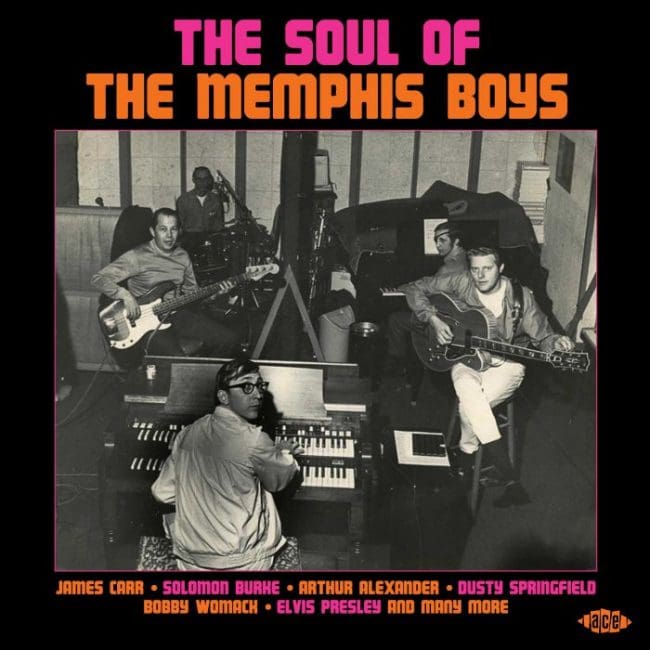
A showcase of the soulful side of the brilliant American Sound Studio session group, 1967-72, directed by Chips Moman and featuring top guitarist Reggie Young.

During the fabulous Highwaymen concert at Nassau Coliseum in Uniondale, Long Island, on 14 March 1990, thankfully preserved on Sony CD and DVD, Kris Kristofferson stopped the proceedings to give a shout-out to the backing musicians. “We’d like to introduce you to this all-star band behind us that Chips Moman put together for the tour and the album,” he said. “They’ve been kicking tail all over the country. Back there on the bass, Mike Leech; on drums, Gene Chrisman; Reggie Young on lead guitar; and on keyboards and vocals, Bobby Wood and Bobby Emmons.” The other Highwaymen were, of course, Johnny Cash, Waylon Jennings and Willie Nelson. The core backing group was none other than the Memphis Boys. Who knew at the time? I wish I had.

Gradually, the Memphis Boys have become recognised as one of the most important 1960s studio groups ever, to rank with the top session musicians at FAME in Muscle Shoals, and Stax and Hi in Memphis. Ace Records has played its part in accelerating this growing awareness through “Memphis Boys: The Story of American Studios” (CDCHD 1330), released in 2012 to tie in with Roben Jones’ book. More recently, there have been the two releases by the studio group’s extraordinary guitarist Reggie Young: “Forever Young” (CDCHD 1500) and “Reggie Young: Session Guitar Star” (CDCHD 1537), lovingly compiled by Bob Dunham.

Now we are focusing primarily on the sublime southern soul tracks – the vast majority making their Ace CD debut – by headline stars and lesser-known artists culled primarily from quality labels such as Atlantic-Atco, Bell-Amy-Mala and John R’s Sound Stage 7 in the years 1967-72. Soulful tracks by Jerry Lee Lewis, Dusty Springfield, the Box Tops and Elvis sit easily here – and how about the rare ‘Don’t Take Your Love’ by the Blossoms? There are also four co-written Dan Penn songs.

The package, beautifully illustrated, features an introduction and detailed track analysis by Red Kelly, who administers the Soul Detective website (souldetective.com) and The Reggie Young Discography Project (reggieyoung.org) – aided by Young’s session books. Kelly gives special praise to American Studio owner Chips Moman, who had set Stax on its way by producing such early hits as Carla Thomas’ ‘Gee Whiz’, the Mar-Keys’ ‘Last Night’ and William Bell’s ‘You Don’t Miss Your Water’. Another crucial person on the production side at American was bass guitarist Tommy Cogbill. In fact, Kelly has received direct input from some of the people who were there, including Jerry Kennedy, Larry Rogers, Papa Don, Charlie Chalmers, Bob Wilson and Harold Thomas.

In the booklet, keyboardist Bobby Wood tells how the Memphis Boys, effectively two sets of session musicians at Royal studio under Willie Mitchell for Hi, and Phillips studio under Stan Kesler for Sun, were pooled together in 1967 under the leadership of Moman. “We didn’t know until we moved to Nashville just what a legacy the 827 Thomas Street Band would leave behind,” Wood said. “In just four-and-a-half years, there were 122 chart records in four different charts: pop, R&B, country and jazz.” As Kris Kristofferson exclaimed at that Nassau Coliseum concert, in reference to the Memphis Boys, “Superstars! These guys are as good as you get.”

JOHN BROVEN

Share this:

£ 12.00

Add to Basket

Release Date:

Format: CD Album

Secret Link