rovided by the application to uniquely identify it. * @type string $name The name of the application password. * @type string $password A one-way hash of the password. * @type int $created Unix timestamp of when the password was created. * @type null $last_used Null. * @type null $last_ip Null. * } * @param string $new_password The generated application password in plain text. * @param array $args { * Arguments used to create the application password. * * @type string $name The name of the application password. * @type string $app_id A UUID provided by the application to uniquely identify it. * } */ do_action( 'wp_create_application_password', $user_id, $new_item, $new_password, $args ); return array( $new_password, $new_item ); } /** * Gets a user's application passwords. * * @since 5.6.0 * * @param int $user_id User ID. * @return array { * The list of application passwords. * * @type array ...$0 { * @type string $uuid The unique identifier for the application password. * @type string $app_id A UUID provided by the application to uniquely identify it. * @type string $name The name of the application password. * @type string $password A one-way hash of the password. * @type int $created Unix timestamp of when the password was created. * @type int|null $last_used The Unix timestamp of the GMT date the application password was last used. * @type string|null $last_ip The IP address the application password was last used by. * } * } */ public static function get_user_application_passwords( $user_id ) { $passwords = get_user_meta( $user_id, static::USERMETA_KEY_APPLICATION_PASSWORDS, true ); if ( ! is_array( $passwords ) ) { return array(); } $save = false; foreach ( $passwords as $i => $password ) { if ( ! isset( $password['uuid'] ) ) { $passwords[ $i ]['uuid'] = wp_generate_uuid4(); $save = true; } } if ( $save ) { static::set_user_application_passwords( $user_id, $passwords ); } return $passwords; } /** * Gets a user's application password with the given UUID. * * @since 5.6.0 * * @param int $user_id User ID. * @param string $uuid The password's UUID. * @return array|null { * The application password if found, null otherwise. * * @type string $uuid The unique identifier for the application password. * @type string $app_id A UUID provided by the application to uniquely identify it. * @type string $name The name of the application password. * @type string $password A one-way hash of the password. * @type int $created Unix timestamp of when the password was created. * @type int|null $last_used The Unix timestamp of the GMT date the application password was last used. * @type string|null $last_ip The IP address the application password was last used by. * } */ public static function get_user_application_password( $user_id, $uuid ) { $passwords = static::get_user_application_passwords( $user_id ); foreach ( $passwords as $password ) { if ( $password['uuid'] === $uuid ) { return $password; } } return null; } /** * Checks if an application password with the given name exists for this user. * * @since 5.7.0 * * @param int $user_id User ID. * @param string $name Application name. * @return bool Whether the provided application name exists. */ public static function application_name_exists_for_user( $user_id, $name ) { $passwords = static::get_user_application_passwords( $user_id ); foreach ( $passwords as $password ) { if ( strtolower( $password['name'] ) === strtolower( $name ) ) { return true; } } return false; } /** * Updates an application password. * * @since 5.6.0 * @since 6.8.0 The actual password should now be hashed using wp_fast_hash(). * * @param int $user_id User ID. * @param string $uuid The password's UUID. * @param array $update { * Information about the application password to update. * * @type string $uuid The unique identifier for the application password. * @type string $app_id A UUID provided by the application to uniquely identify it. * @type string $name The name of the application password. * @type string $password A one-way hash of the password. * @type int $created Unix timestamp of when the password was created. * @type int|null $last_used The Unix timestamp of the GMT date the application password was last used. * @type string|null $last_ip The IP address the application password was last used by. * } * @return true|WP_Error True if successful, otherwise a WP_Error instance is returned on error. */ public static function update_application_password( $user_id, $uuid, $update = array() ) { $passwords = static::get_user_application_passwords( $user_id ); foreach ( $passwords as &$item ) { if ( $item['uuid'] !== $uuid ) { continue; } if ( ! empty( $update['name'] ) ) { $update['name'] = sanitize_text_field( $update['name'] ); } $save = false; if ( ! empty( $update['name'] ) && $item['name'] !== $update['name'] ) { $item['name'] = $update['name']; $save = true; } if ( $save ) { $saved = static::set_user_application_passwords( $user_id, $passwords ); if ( ! $saved ) { return new WP_Error( 'db_error', __( 'Could not save application password.' ) ); } } /** * Fires when an application password is updated. * * @since 5.6.0 * @since 6.8.0 The password is now hashed using wp_fast_hash() instead of phpass. * Existing passwords may still be hashed using phpass. * * @param int $user_id The user ID. * @param array $item { * The updated application password details. * * @type string $uuid The unique identifier for the application password. * @type string $app_id A UUID provided by the application to uniquely identify it. * @type string $name The name of the application password. * @type string $password A one-way hash of the password. * @type int $created Unix timestamp of when the password was created. * @type int|null $last_used The Unix timestamp of the GMT date the application password was last used. * @type string|null $last_ip The IP address the application password was last used by. * } * @param array $update The information to update. */ do_action( 'wp_update_application_password', $user_id, $item, $update ); return true; } return new WP_Error( 'application_password_not_found', __( 'Could not find an application password with that id.' ) ); } /** * Records that an application password has been used. * * @since 5.6.0 * * @param int $user_id User ID. * @param string $uuid The password's UUID. * @return true|WP_Error True if the usage was recorded, a WP_Error if an error occurs. */ public static function record_application_password_usage( $user_id, $uuid ) { $passwords = static::get_user_application_passwords( $user_id ); foreach ( $passwords as &$password ) { if ( $password['uuid'] !== $uuid ) { continue; } // Only record activity once a day. if ( $password['last_used'] + DAY_IN_SECONDS > time() ) { return true; } $password['last_used'] = time(); $password['last_ip'] = $_SERVER['REMOTE_ADDR']; $saved = static::set_user_application_passwords( $user_id, $passwords ); if ( ! $saved ) { return new WP_Error( 'db_error', __( 'Could not save application password.' ) ); } return true; } // Specified application password not found! return new WP_Error( 'application_password_not_found', __( 'Could not find an application password with that id.' ) ); } /** * Deletes an application password. * * @since 5.6.0 * * @param int $user_id User ID. * @param string $uuid The password's UUID. * @return true|WP_Error Whether the password was successfully found and deleted, a WP_Error otherwise. */ public static function delete_application_password( $user_id, $uuid ) { $passwords = static::get_user_application_passwords( $user_id ); foreach ( $passwords as $key => $item ) { if ( $item['uuid'] === $uuid ) { unset( $passwords[ $key ] ); $saved = static::set_user_application_passwords( $user_id, $passwords ); if ( ! $saved ) { return new WP_Error( 'db_error', __( 'Could not delete application password.' ) ); } /** * Fires when an application password is deleted. * * @since 5.6.0 * * @param int $user_id The user ID. * @param array $item The data about the application password. */ do_action( 'wp_delete_application_password', $user_id, $item ); return true; } } return new WP_Error( 'application_password_not_found', __( 'Could not find an application password with that id.' ) ); } /** * Deletes all application passwords for the given user. * * @since 5.6.0 * * @param int $user_id User ID. * @return int|WP_Error The number of passwords that were deleted or a WP_Error on failure. */ public static function delete_all_application_passwords( $user_id ) { $passwords = static::get_user_application_passwords( $user_id ); if ( $passwords ) { $saved = static::set_user_application_passwords( $user_id, array() ); if ( ! $saved ) { return new WP_Error( 'db_error', __( 'Could not delete application passwords.' ) ); } foreach ( $passwords as $item ) { /** This action is documented in wp-includes/class-wp-application-passwords.php */ do_action( 'wp_delete_application_password', $user_id, $item ); } return count( $passwords ); } return 0; } /** * Sets a user's application passwords. * * @since 5.6.0 * * @param int $user_id User ID. * @param array $passwords { * The list of application passwords. * * @type array ...$0 { * @type string $uuid The unique identifier for the application password. * @type string $app_id A UUID provided by the application to uniquely identify it. * @type string $name The name of the application password. * @type string $password A one-way hash of the password. * @type int $created Unix timestamp of when the password was created. * @type int|null $last_used The Unix timestamp of the GMT date the application password was last used. * @type string|null $last_ip The IP address the application password was last used by. * } * } * @return int|bool User meta ID if the key didn't exist (ie. this is the first time that an application password * has been saved for the user), true on successful update, false on failure or if the value passed * is the same as the one that is already in the database. */ protected static function set_user_application_passwords( $user_id, $passwords ) { return update_user_meta( $user_id, static::USERMETA_KEY_APPLICATION_PASSWORDS, $passwords ); } /** * Sanitizes and then splits a password into smaller chunks. * * @since 5.6.0 * * @param string $raw_password The raw application password. * @return string The chunked password. */ public static function chunk_password( #[\SensitiveParameter] $raw_password ) { $raw_password = preg_replace( '/[^a-z\d]/i', '', $raw_password ); return trim( chunk_split( $raw_password, 4, ' ' ) ); } /** * Hashes a plaintext application password. * * @since 6.8.0 * * @param string $password Plaintext password. * @return string Hashed password. */ public static function hash_password( #[\SensitiveParameter] string $password ): string { return wp_fast_hash( $password ); } /** * Checks a plaintext application password against a hashed password. * * @since 6.8.0 * * @param string $password Plaintext password. * @param string $hash Hash of the password to check against. * @return bool Whether the password matches the hashed password. */ public static function check_password( #[\SensitiveParameter] string $password, string $hash ): bool { if ( ! str_starts_with( $hash, '$generic$' ) ) { /* * If the hash doesn't start with `$generic$`, it is a hash created with `wp_hash_password()`. * This is the case for application passwords created before 6.8.0. */ return wp_check_password( $password, $hash ); } return wp_verify_fast_hash( $password, $hash ); } } FOUR SHADES OF RHYTHM - HEY BARTENDER KNOCK ME A ZOMBIE (PTS 1 & 2) SENSATION 45 - No Hit Records
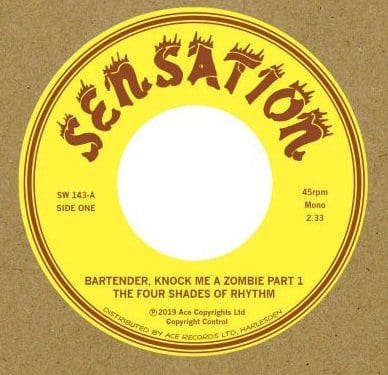
FOUR SHADES OF RHYTHM – HEY BARTENDER KNOCK ME A ZOMBIE (PTS 1 & 2) SENSATION 45

Brilliant Louis Jordan style record right on the jazz / Rhythm and Blues cusp, Roger tells the full story below.

The first Sensation release in 69 years!

As Marv Goldberg points out in his R&B Notebook article, the Four (or Five) Shades Of Rhythm was not an uncommon moniker. The main usage, however, was by a Cleveland-based outfit that formed in around 1940, continuing with varying line-ups for some years. They first appeared on disc on Vitacoustic in 1948. The first four Vitacoustic platters were shared by Bernie Besman’s Sensation label, and the Four Shades Of Rhythm was the next Vitacoustic release, so who knows who cut the group first. The upshot is that their recording of the magnificent jive talkin’ ‘Bartender, Knock Me A Zombie’ (a tune also cut by Browley Guy on Miracle in 1949) was discovered by Ace in the Sensation vaults.

The Zombie is not a cocktail for the light drinker, as described: “I’ll take a sip, a little bit of nip from a Zombie. Say, bartender, (What do you want?) knock me a Zombie.” The bartender probably took an ounce each of white, golden and dark rum, apricot brandy, pineapple and papaya juice, an optional jiggle of gin, added a dash of grenadine and put it all in a shaker. Poured the mix into a Tiki-style glass and then added half an ounce of 151-proof rum for good measure. Hold the ice. Garnish with even more fruit and prepare to “feel so far away”.

This ode to the high-powered cocktail lay unperturbed until given a recent airing on Cerys Matthews’ BBC Radio 6 show, resulting in an immediate demand to make it available to the public at large. So the Ace team sprung into action, and here it is in a part one and part two, the first Sensation release since 1950.

“(You want sherry?) Uh uh, man. That’s wine…”

ROGER ARMSTRONG

Share this:

£ 8.00

Add to Basket

Release Date:

Format: Vinyl Single

Secret Link